


The Restoration of an Ancestral Home of Filipino Revolutionaries

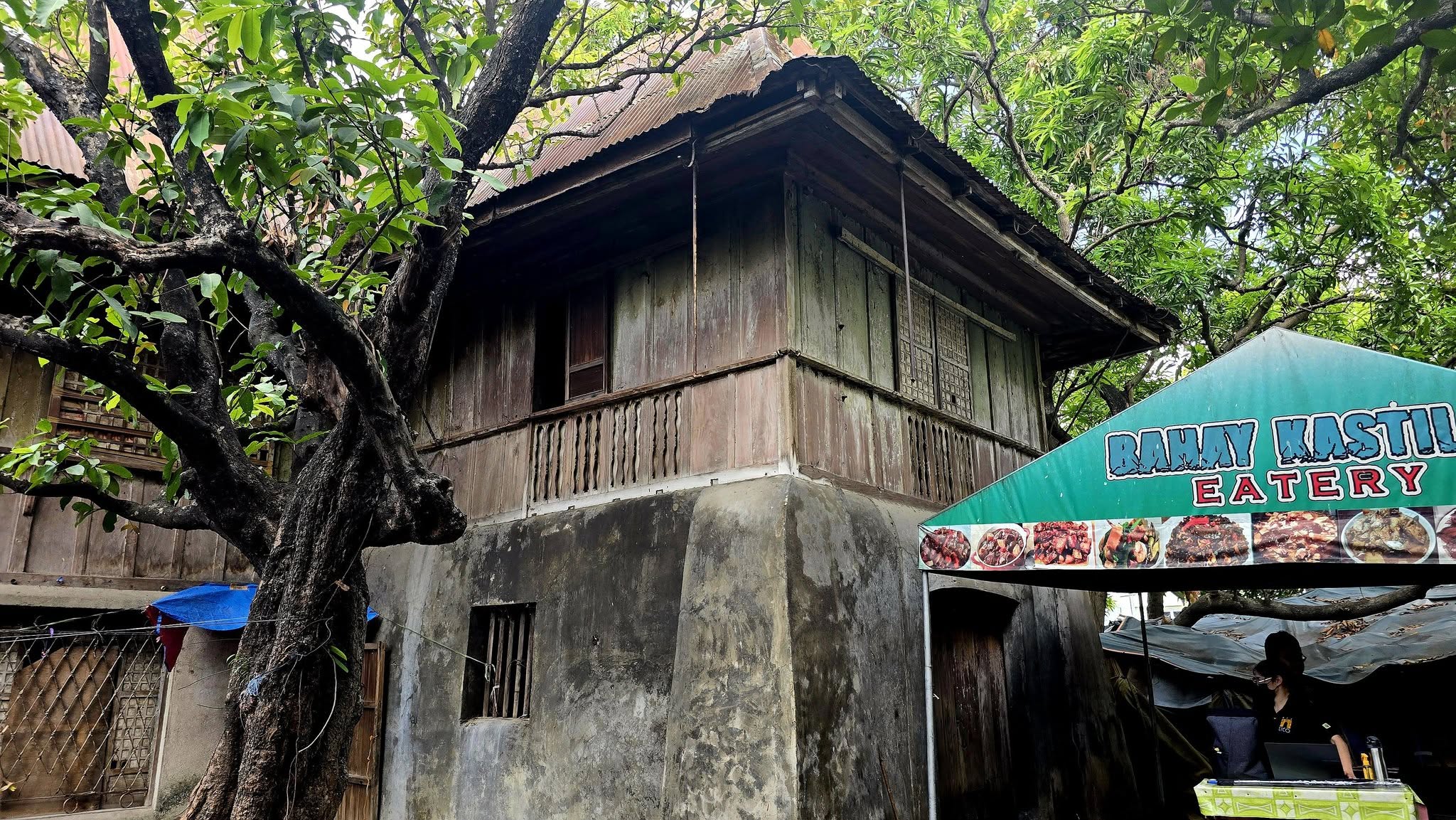
The house was originally built as the residence of María Dolores Gómez-Trias and her husband José Trias, the grandparents of General Mariano Trias, the First Vice President of the Philippine Revolutionary Government. María Dolores occupies a particularly significant place in Philippine history—not only as the matriarch of a distinguished Caviteño family, but also as the sister of Fr. Mariano Gómez, one of the three martyred priests of Gomburza. Through her, the Sarayba House is intimately connected to the intertwined narratives of faith, reform, and the awakening of national consciousness in the late nineteenth century. While historical records tend to privilege public acts over private lives, the house itself offers a portrait of quiet refinement and strength. Its scale, painted ceilings, devotional objects, and domestic furnishings suggest a household shaped by piety, education, and civic responsibility—values passed down through generations. The dresses displayed in one of the cuartos, belonging to Doña Ineng Sarayba-Pascual, a great-granddaughter of the original owners, affirm that this is not merely a monument of the past, but part of a living lineage where memory, family, and place remain deeply intertwined.
Constructed in the late nineteenth century, the Sarayba Ancestral House is among the oldest surviving residences in General Trias. Over time, it assumed multiple roles that mirror the town’s layered history. During the Second World War, it was used as a Japanese garrison. In the postwar years, it temporarily served as a school. These changing functions explain later additions to the property, including a cuadra for horses. One descendant shared that the last resident of the house was an equestrian, and the family preserved her original saddle and riding equipment—tangible remnants of the house’s more recent domestic life.
Architecturally, the house is a distinguished example of the bahay na bato, shaped by Spanish colonial planning principles and indigenous Filipino building traditions. Its large capiz window panels, ventanillas, and transoms enable cross-ventilation, while high ceilings allow heat to dissipate naturally. Structurally, the house relies on a resilient nail less wooden framing system, with unprocessed timber posts carrying the roof load continuously from the ground upward. The adobe masonry walls of the ground floor function as a stone skirt—concealing and protecting these wooden “legs” from moisture and impact. This system explains why the house could theoretically stand even without its masonry enclosure, revealing a sophisticated vernacular intelligence rooted in climate, material, and seismic awareness.
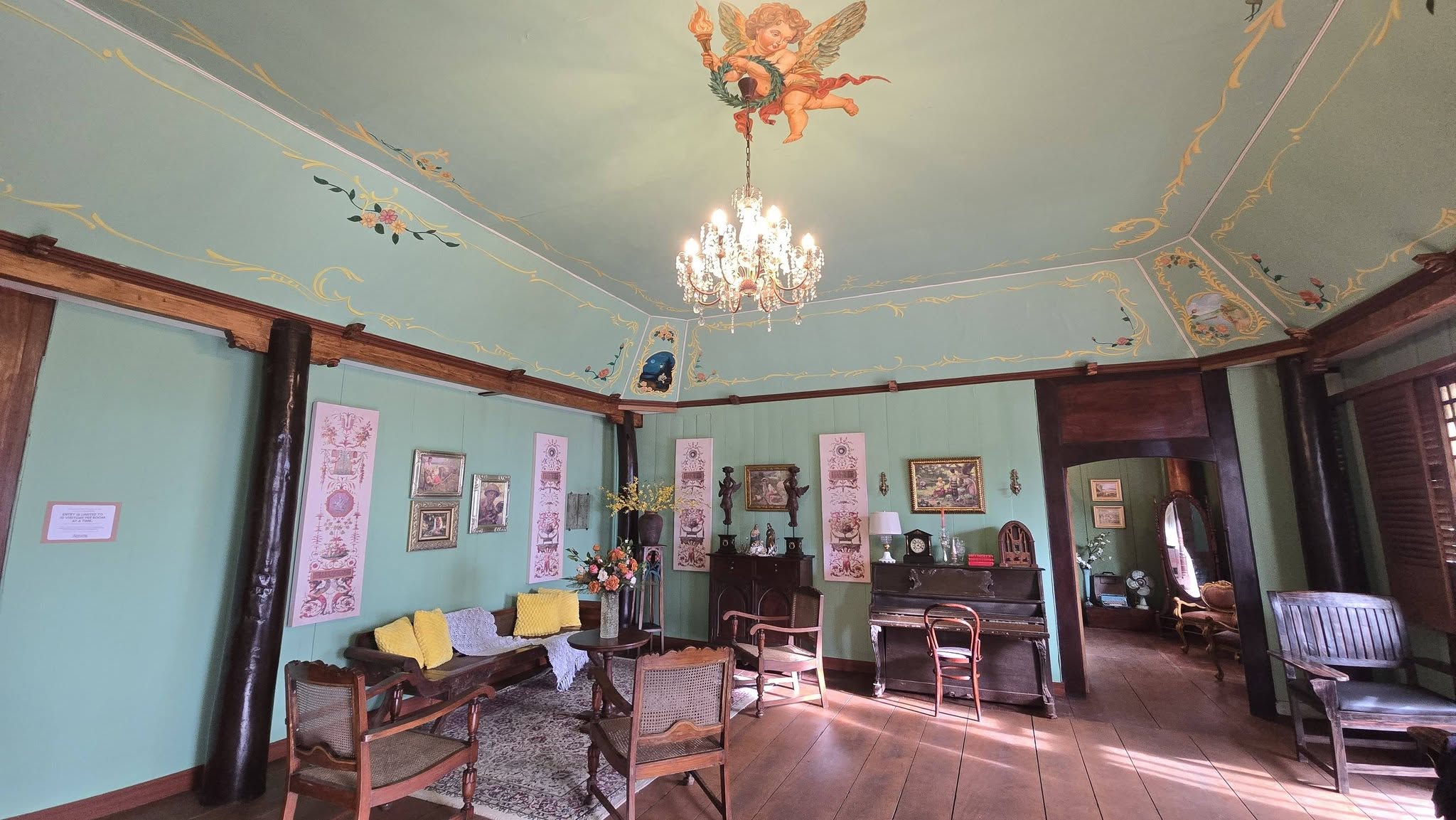
The one-year conservation process focused first on structural stabilization and material honesty. The roof was replaced, damaged elements were repaired rather than indiscriminately renewed, and lime plaster was reintroduced in place of incompatible cement. Engineering supervision was led by Engr. Jero Pascual, a heritage professional who worked closely with me to ensure that structural safety, historic integrity, and interior curation were treated as a single, inseparable task.
One of the most delicate and meaningful interventions involved the painted canvas ceiling—one of the rarest surviving features of the house. By the time conservation began, the original ceiling was already beyond repair: brittle, fragmented, and structurally unsalvageable. It was therefore replaced with a similar canvas material, guided by surviving fragments. Our architect-muralist, Brylle Patiu, reinterpreted the floral, foliage, and bucolic iconography as faithfully as possible—not as imitation, but as informed continuity. Fragments of the original painted canvas are now displayed within the house, allowing visitors to see both the fragility of the original and the discipline of the reconstruction—an honest dialogue between loss and renewal.
Equally significant was the recognition of the house’s pre-restoration life as a paresan. Known locally as the Bahay Kastila Eatery, it remained a place of gathering during years of neglect. This everyday use kept the house alive—not frozen, not abandoned, but woven into the social fabric of the community. When the house was eventually conserved and transformed into a museum, it did not displace memory; it built upon it. The paresan became one more chapter in the house’s long communal life.
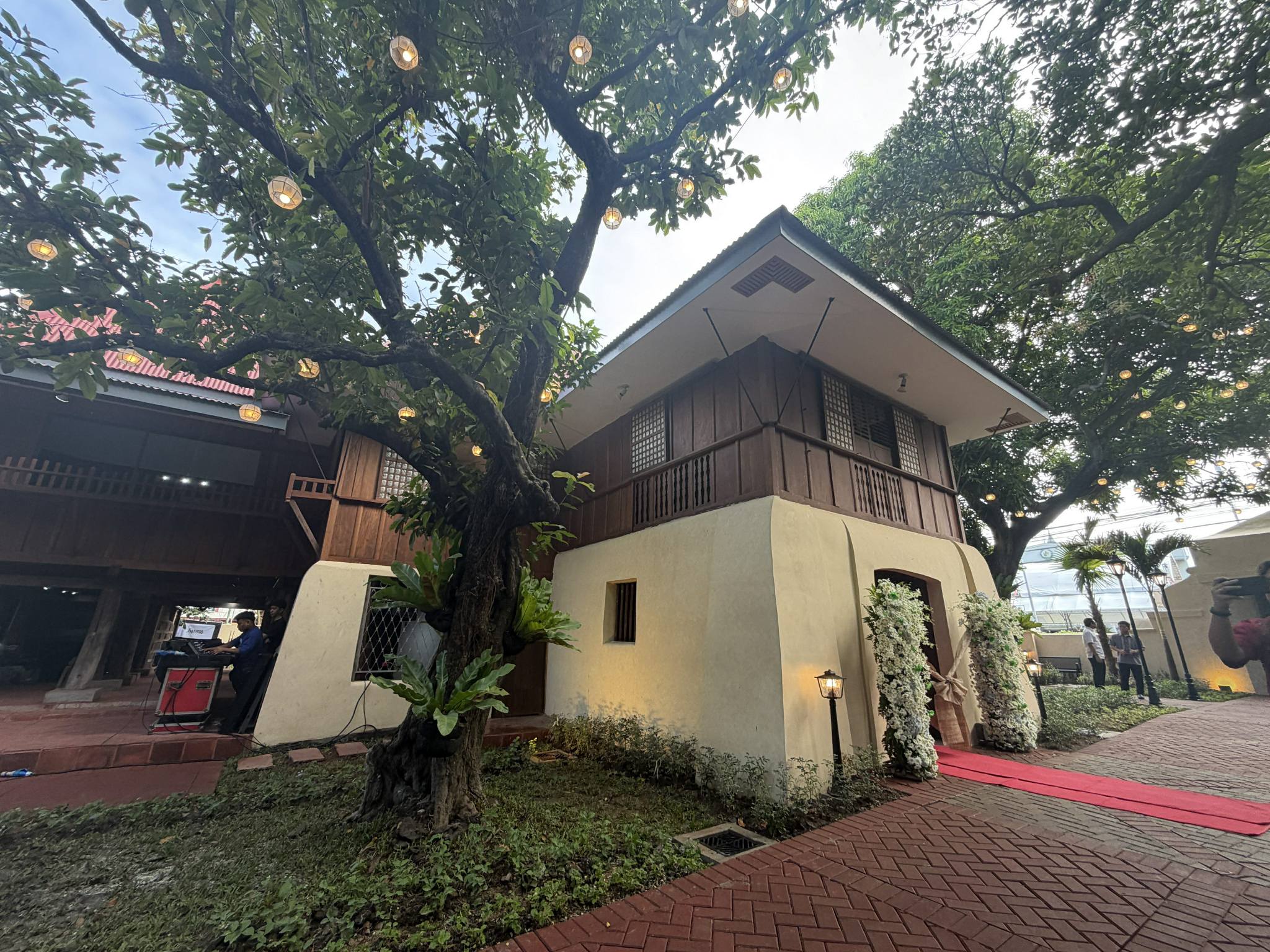
Today, the Sarayba Ancestral House remains under the ownership of the Trias-Sarayba family. While the original estate was gradually subdivided among descendants, the ancestral house itself survived—an increasingly rare circumstance in a rapidly transforming city. Recognizing its significance, the City Government of General Trias entered into a usufruct agreement with the owners, ensuring both protection and public access. This collaborative model safeguards private ownership while affirming the house’s role as shared civic heritage.
What ultimately makes this project important to me is that it embodies what heritage conservation ought to be—not an elitist exercise reserved for experts, but a public act rooted in pedagogy, generosity, and justice. The Sarayba House binds the intimate scale of family life with the larger narrative of the nation. Its architecture teaches resilience and climatic wisdom. Its history teaches responsibility to memory. Its transformation affirms that heritage survives only when it is shared. Before restoration, it was a place of daily meals. Today, it is becoming a museum that invites ordinary citizens to enter without intimidation, to look up at a painted ceiling in wonder, to ask questions, and to recognize themselves in a conserved space. In restoring the Sarayba Ancestral House, we did not merely recover architecture—we returned dignity, memory, and belonging to the city of General Trias.

Following the soft opening, the museum temporarily closed to allow the continuation of development works and the completion of its full interpretive and visitor facilities. The formal opening to the public is scheduled for 2026, once these enhancements are in place.
Visitors can look forward to a carefully curated museum experience, the opening of a Heritage Café, and a year-long program of cultural and educational activities being planned by the City Tourism Office. We invite the public to stay tuned as the Sarayba Ancestral House prepares to reopen as a fully realized heritage destination for General Trias.


